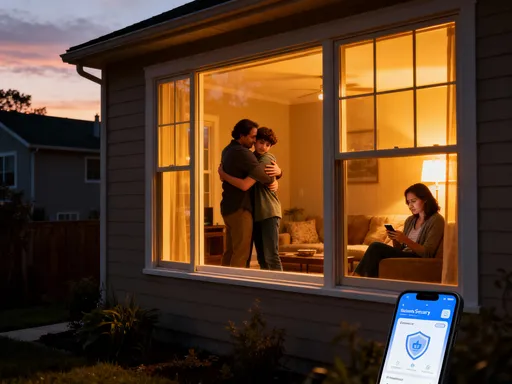
Tired of Accidentally Sharing Your Private Moments With the Wrong People? This Permission Fix Changed Everything
We’ve all been there—posting a casual selfie, only to realize too late it’s visible to your boss or distant relatives. In our hyper-connected world, one wrong tap can turn a harmless moment into an awkward mess. I learned this the hard way. But what if a simple app setting could protect your privacy while helping you connect more authentically? It’s not magic—it’s smart permission management. And it quietly transformed how I share, grow, and show up online.
The Moment I Realized My Phone Wasn’t on My Side
It started with a photo—just a quick snapshot of me in my cozy sweater, holding a mug of tea on my porch. I posted it to a social app without thinking, smiling at how peaceful the moment felt. Later that evening, I opened my phone and saw a comment that made my stomach drop: “Love the sweater! Didn’t know you lived in Oakridge.” It was from my manager. My manager. I hadn’t told anyone at work where I lived. I hadn’t even told most of my coworkers what my street looked like. And yet, there it was—my home, my quiet sanctuary, visible to someone I only interacted with during team meetings and performance reviews.
I felt exposed, not just physically but emotionally. That little photo was meant for my close circle—friends who understand my love for slow mornings and fall leaves. But because of how my app permissions were set, that image was shared with far more than I intended. I didn’t even know the app had access to my location by default. I hadn’t said yes to that. Or had I? I retraced my steps—remembering the flurry of “Allow” buttons I’d tapped when first installing apps months ago. Back then, I just wanted to get to the fun part: posting, scrolling, connecting. I didn’t stop to think about what each permission meant. I didn’t realize my phone wasn’t protecting me—it was quietly handing over pieces of my life to algorithms and contacts I hadn’t approved.
That moment changed how I saw my relationship with technology. I used to think of my phone as a tool—a helpful assistant that kept me organized and connected. But that evening, I realized it was more like a well-meaning but overeager friend who shares your secrets without asking. I wasn’t in control. And if I didn’t take back that control, these little leaks would keep happening—maybe next time with something more sensitive, more personal. I decided then: I needed to understand what my apps were doing, and why.
What App Permissions Are (And Why You’ve Been Ignoring Them)
Let’s be honest—when you download a new app, how often do you actually read what it’s asking for? Most of us tap “Allow” on permissions the same way we agree to terms and conditions: without really seeing them. “Access to photos?” Sure. “Location tracking?” Why not. “Contacts?” Okay, fine. We do it because we want the app to work. We want to post that picture, tag our friend, check in at our favorite café. But each of those taps is a tiny decision with real consequences.
App permissions are like keys. When you grant access, you’re giving an app permission to use certain parts of your phone—your camera, your microphone, your contacts, your location. Think of it this way: if your phone is your home, permissions are the keys you hand out. Giving your camera roll to every app is like leaving your front door unlocked and telling everyone they can walk in and look through your photo albums. Sounds a little scary when you put it that way, doesn’t it?
“Access to photos” doesn’t just mean the app can pull up pictures to post. It might also mean it can scan your entire gallery, analyze your habits, or even back up your images to a server you didn’t know existed. “Location tracking” can tell not just where you are now, but where you’ve been every day this week—your gym, your child’s school, your weekend getaway spot. And “contacts access”? That can mean the app scans your phonebook and suggests your cousin’s new boyfriend as someone you might know—even if you’ve never interacted with him online.
The truth is, we’ve been trained to ignore these warnings. The pop-ups are small, the language is technical, and the pressure to keep moving forward is strong. But every “Allow” is a choice. And when we don’t make those choices consciously, we give up control. The good news? You don’t need to be a tech expert to understand this. You just need to care about your privacy—and your peace of mind.
How Mismanaged Permissions Limit Your Social Growth
You might be thinking, “So what if my boss sees my weekend brunch? It’s not a big deal.” And sometimes, it isn’t. But over time, these small exposures add up. They create a sense of unease—a feeling that you can’t fully relax when you’re online. And that changes how you show up in your digital life.
I started noticing it in myself. After the porch photo incident, I became more guarded. I’d take a great picture of my garden or a moment with my daughter, but then I’d hesitate. Who will see this? Could this be misinterpreted? Is this too personal? I began holding back—not because I had anything to hide, but because I didn’t trust the system. And that’s when it hit me: poor permission settings don’t just risk privacy—they limit your ability to connect.
When you’re afraid of being seen by the wrong people, you either stop sharing altogether or you start curating a version of yourself that feels safe, not real. You post only the polished moments—perfect dinners, smiling vacations, motivational quotes—because those feel neutral. But those aren’t the moments that build deep relationships. Real connection comes from authenticity: the messy kitchen, the quiet morning, the unfiltered laugh. When your settings are out of alignment, you end up either oversharing with the wrong crowd or undersharing with the right one.
And that affects your social growth in subtle but powerful ways. Old friends might think you’ve drifted apart because you’re not posting like you used to. New acquaintances might not feel they really know you. You miss opportunities to bond over shared struggles or simple joys because you’re too cautious. The irony is, the very tools meant to help us connect can end up isolating us—if we don’t set them up with intention.
The Silent Gatekeeper: How Permissions Shape Who Sees What
Here’s something most of us don’t think about: your app permissions act like an invisible gatekeeper for your social life. They decide who gets to see your location, who can be tagged in your posts, and even who gets notified when you’re nearby. These aren’t just technical settings—they’re relationship filters.
Imagine this: you’re planning a weekend getaway with your sister. You post a quick update: “So excited for our mountain cabin trip!” But if your location is turned on and your audience settings are broad, that post might show up in your client’s feed. Now, they know you’re out of town. They might even see the exact trail you hiked, thanks to geotags. That’s not just awkward—it could be professionally risky. On the flip side, if your permissions are too tight, your best friend might not see your post at all, and you miss the chance to share that joy with someone who truly cares.
Smart permission settings let you share freely—but selectively. They allow you to send a photo of your daughter’s school play to your family group while keeping it away from coworkers scrolling through your public profile. They let you check in at your favorite yoga studio for your close friends to see, without broadcasting your routine to everyone. It’s about creating digital boundaries that reflect your real-life relationships.
Think of it like hosting a party. You wouldn’t invite your entire city—you’d invite the people who matter, who add value, who make you feel safe. Your online presence should work the same way. Permissions are the guest list. When you manage them well, you create space for meaningful connection without the fear of overexposure. You stop worrying about who’s watching and start enjoying who’s really there.
A Step-by-Step Fix Anyone Can Do in 10 Minutes
Now, I know what you’re thinking: “This sounds great, but isn’t it complicated? Do I need to hire someone? Will I break my phone?” I used to think that too. But here’s the truth: cleaning up your app permissions is easier than organizing your kitchen junk drawer. And it takes less time than a single episode of your favorite show.
Let’s start with iPhone. Open your Settings app—the one with the gray gears. Scroll down until you see “Privacy & Security.” Tap it. There, you’ll see a list: Location Services, Photos, Contacts, Camera, Microphone, and more. Tap each one. You’ll see a list of apps that have asked for access. Look for ones that don’t need that permission. Does your weather app need your contacts? Probably not. Does your recipe app need your camera? Unlikely. Tap the app, then switch access to “Never” or “Ask Next Time.”
On Android, it’s just as simple. Go to Settings, then “Apps” or “Application Manager.” Tap the three dots, choose “Permission Manager.” From there, you can review access by category—location, camera, microphone, etc. You’ll be surprised how many games have your location or how many shopping apps have your microphone. Turn them off one by one. Don’t worry—you can always turn them back on if an app really needs it.
While you’re at it, check your social media apps. Open Instagram, go to Settings, then “Privacy,” then “Story Controls” or “Audience.” Make sure your close friends list is updated. Use “Close Friends” for personal moments and keep other posts public only if you want them that way. On Facebook, review your audience selector before every post. That little globe or silhouette icon? That’s your control. Tap it. Change it. Own it.
Do this once, and you’ll immediately feel more in control. Do it every few months, and you’ll stay that way. This isn’t about fear—it’s about freedom. Freedom to share what you want, with who you want, without second-guessing.
How This Small Change Improved My Relationships
After I cleaned up my permissions, something unexpected happened: I started sharing again. Not just more, but better. I posted a video of my daughter baking cookies—flour everywhere, laughter filling the kitchen. I shared it with my family and close friends, not my entire network. And the responses were different. Warmer. More personal. My sister commented, “This is exactly how we used to be at Mom’s house.” An old friend messaged me: “I forgot how much I miss these moments. Let’s plan a visit.”
That’s when I realized: when you feel safe, you show up more fully. I wasn’t performing anymore. I wasn’t thinking, “Will this look unprofessional?” or “What will so-and-so think?” I was just being me. And that authenticity invited deeper conversations, real reconnections, and a sense of belonging I hadn’t felt in years.
Even my relationship with technology changed. My phone stopped feeling like a source of anxiety and started feeling like a tool for connection. I wasn’t dreading the next accidental share. I wasn’t overthinking every post. I had set boundaries, and those boundaries gave me confidence. I could be present in the moment, knowing that when I chose to share it, it would go to the right people.
And honestly? My relationships offline improved too. When you’re not constantly worried about your digital image, you show up more authentically in real life. I became a better listener, a more present friend, a more grounded mom. Because I wasn’t split between who I was and who I thought I should appear to be. That’s the real gift of permission management—it doesn’t just protect your privacy. It protects your peace.
Building a Smarter, More Trusted Digital Life
Here’s what I’ve learned: technology doesn’t have to be overwhelming. It doesn’t have to feel like a game you’re losing. When used mindfully, it can support your life instead of complicating it. Managing your app permissions isn’t about becoming a tech genius. It’s about becoming the curator of your digital world.
You wouldn’t let a stranger organize your photo albums or plan your family dinners. So why let apps do it by default? Every permission you review, every setting you adjust, is a small act of self-respect. It says, “I matter. My time matters. My relationships matter.”
And the beauty is, this isn’t a one-time fix. It’s the start of a mindset. Once you get into the habit of asking, “Do I really want this app to have this access?” you start applying that awareness elsewhere. You become more intentional about your screen time, your online purchases, your digital footprint. You stop reacting and start choosing.
So tonight, after the kids are in bed or during your morning coffee, take those 10 minutes. Open your settings. Review your permissions. Make a few small changes. You don’t have to do it all at once. Just start. Because the goal isn’t perfection—it’s peace. It’s knowing that your digital life reflects your values, not someone else’s algorithm.
You’re not just protecting your privacy. You’re creating space for real connection, for joy, for growth. And that? That’s worth a few taps on your phone.